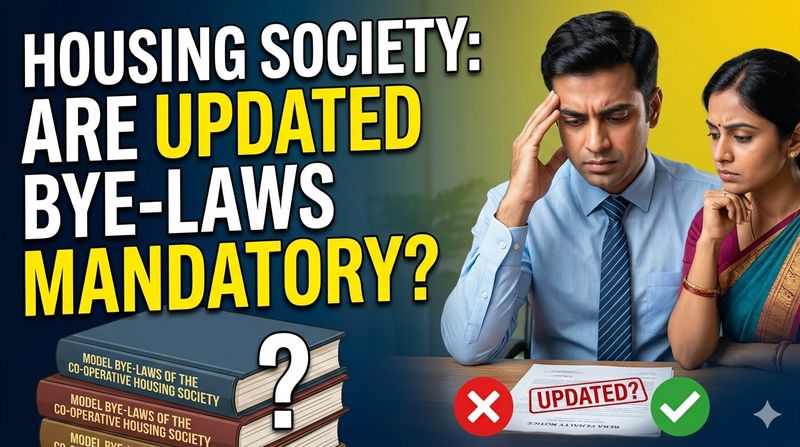
A common concern among members of cooperative housing societies is whether the bye-laws must be updated every time there is a change in law. Many societies continue to follow the 2014 Model Bye-Laws, even though several important amendments have taken place since then.
Understanding the legal position is essential to avoid confusion and disputes.
Status of 2014 Model Bye-Laws
The Model Bye-Laws 2014 were issued as a guiding framework for cooperative housing societies. However:
- They do not automatically update with every legal amendment
- They may not reflect recent legal changes
Since 2014, important amendments—especially under the Maharashtra Cooperative Societies Act, 1960—have significantly changed governance and compliance requirements.
Do Bye-Laws Need to Be Amended Regularly?
Legally speaking:
- It is not mandatory for societies to amend bye-laws after every amendment in law
- However, it is advisable and beneficial to do so
This is because:
- Outdated bye-laws may create confusion or contradictions
- Members may rely on obsolete provisions
- It may lead to legal disputes and misinterpretation
Which Law Prevails in Case of Conflict?
This is the most important principle:
- Statutory law always prevails over bye-laws
For example:
- Amendments introduced under the MCS (Amendment) Act, 2019 will be binding on all societies, even if:
- The bye-laws are not updated
- There is a contradiction in provisions
Thus, societies cannot rely on outdated bye-laws to avoid compliance with current law.
Why Should Societies Update Bye-Laws?
Even though not compulsory, updating bye-laws ensures:
- Clarity in governance
- Alignment with latest legal provisions
- Reduced litigation risk
- Better transparency and compliance
It also helps members understand their rights and responsibilities accurately.
Procedure to Amend Bye-Laws
Societies can update their bye-laws by following a prescribed legal process:
1. Proposal by Managing Committee
- The committee prepares proposed amendments
- Circulates the proposal to members
2. Notice to Members
- Minimum 14 days’ notice must be given before the General Body Meeting
3. Approval by General Body
- Resolution must be passed by two-thirds majority of members present and voting
4. Registrar’s Approval
- Amendments must be:
- Submitted to the Registrar
- Approved and registered
Only after registration do the amended bye-laws become legally effective.
Common Issues Due to Outdated Bye-Laws
- Conflicting provisions with new laws
- Misuse of old rules by managing committees
- Lack of clarity in elections, penalties, and member rights
- Difficulty in dispute resolution
Rights of Members
If your society has not provided updated bye-laws:
- You can request a copy of existing bye-laws
- You can propose amendments in the General Body
- You may raise the issue before:
- Managing Committee
- Registrar (if necessary)
Conclusion
While societies are not strictly required to update bye-laws after every amendment, it is highly recommended to keep them aligned with current laws. Ultimately, the latest statutory provisions will always override outdated bye-laws, making it essential for societies to periodically review and amend their governing documents for smooth and lawful functioning.