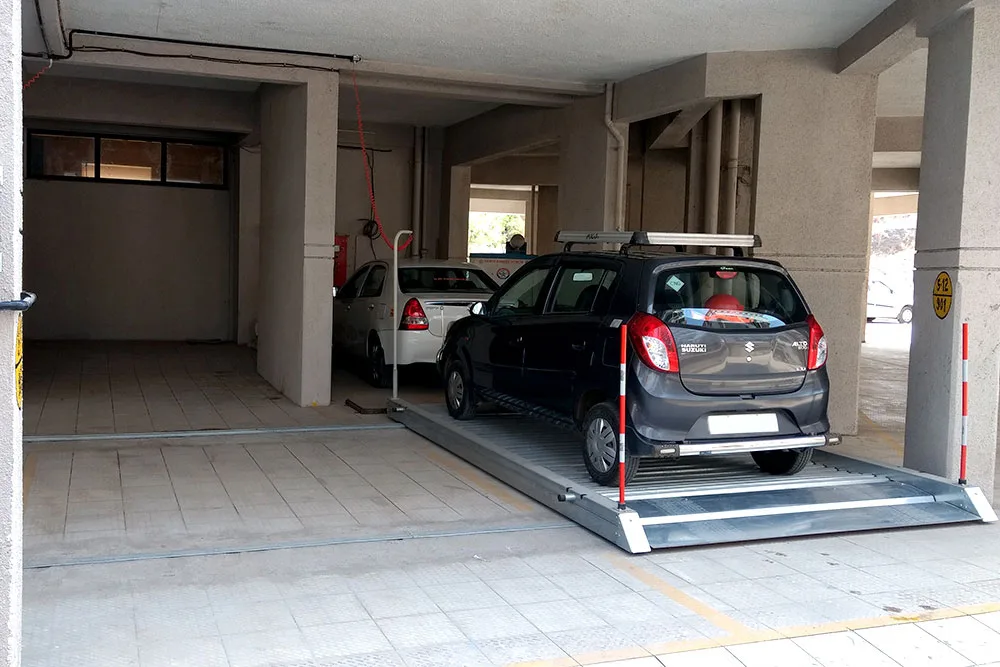
Parking allocation is one of the most sensitive issues during redevelopment of cooperative housing societies. Many societies consider rotational parking between upper and lower basements, especially in rehab buildings where space planning becomes complex.
The key questions are whether such an arrangement is legally valid, whether it needs 100% consent, and whether it can be included in the Permanent Alternate Accommodation Agreement (PAAA).
Consent Required for Redevelopment Decisions
Under the Maharashtra Cooperative Societies Act, 1960, redevelopment of a housing society can be initiated with the consent of minimum 51% of members.
Once redevelopment is approved:
-
The General Body becomes the final authority to decide terms
-
All key aspects, including parking policy, are approved by majority
-
There is no requirement of 100% consent for such decisions
However, for smoother implementation, societies often try to achieve broader consensus.
Can Rotational Parking Be Legally Allowed?
Yes, rotational parking is legally permissible, provided:
-
It is approved by the General Body Resolution
-
It is fair, transparent and uniformly applicable
-
It is clearly documented in agreements
There is no specific prohibition in law against rotation of parking between upper and lower basements.
Such arrangements are often adopted when:
-
Parking availability is limited
-
Basement levels have different accessibility or convenience
-
Equal opportunity needs to be provided to all members
Is It Necessary to Include in Development Agreement and PAAA?
Absolutely. Clarity in documentation is crucial to avoid future disputes.
The parking arrangement must be:
-
Clearly defined in the Development Agreement
-
Explicitly mentioned in each member’s Permanent Alternate Accommodation Agreement (PAAA)
If parking is rotational, the agreement should specify:
-
Duration of rotation (e.g., yearly, periodic)
-
Allocation mechanism
-
Rights and limitations of members
Proper documentation ensures that members cannot later dispute the arrangement.
What About New Flat Purchasers?
Rotational parking typically applies to existing (rehab) members.
For new buyers:
-
The developer may sell parking along with flats (subject to availability)
-
Parking terms must be clearly mentioned in the Agreement for Sale
As per MahaRERA guidelines, especially Circular 36 of 2021 and Circular 54 of 2024:
-
Parking details must be transparent
-
Buyers must be informed about the type and number of parking spaces
Will the Society Accept Rotational Parking After Formation?
An important point to understand is that:
-
The existing society is not dissolved during redevelopment
-
The same society continues post-redevelopment
If rotational parking is:
-
Approved by the General Body, and
-
Incorporated in agreements
then the society is bound to implement it after redevelopment.
However, practical challenges may arise:
-
Members may later demand permanent parking allocation
-
Disputes may occur if rotation is inconvenient
Therefore, it is advisable to ensure that the policy is well-structured, practical and clearly accepted by members at the initial stage.
Best Practices for Societies
To avoid future conflicts, societies should:
-
Pass a clear General Body Resolution on parking policy
-
Ensure transparency and fairness in allocation
-
Document rotation rules in detail
-
Take legal advice before finalising agreements
Conclusion
Rotational parking between upper and lower basements in redevelopment projects is legally valid and does not require 100% consent of members. Approval by the General Body (minimum 51% for redevelopment decisions) is sufficient. However, such arrangements must be clearly incorporated in the Development Agreement and PAAA to ensure enforceability. Once agreed upon, the society is bound to follow the arrangement after redevelopment. Careful planning and proper documentation are key to avoiding future disputes.