
The Maharashtra Government has proposed significant amendments to simplify the process of converting Occupancy Class II (leasehold) land into Occupancy Class I (freehold) land for cooperative housing societies. The revised framework is expected to benefit more than 6,000 housing societies across Mumbai and the Mumbai Metropolitan Region (MMR) by making land ownership easier and expanding the categories of societies and members eligible for conversion.
The Revenue Department issued a draft notification on June 4, 2026, under the Maharashtra Land Revenue (Conversion of Occupancy Class II and Leasehold Lands into Occupancy Class I) (Second Amendment) Rules, 2026, inviting public suggestions and objections before finalising the new rules.
What Is Occupancy Class II Land?
Occupancy Class II land is generally land granted or leased by the government with restrictions on transfer and ownership. Such land cannot be freely sold, transferred, or redeveloped without obtaining permission from the competent authority.
After conversion into Occupancy Class I, the restrictions are substantially removed, giving societies and members greater ownership rights and flexibility for redevelopment or future transactions.
51% Member Consent Becomes Mandatory
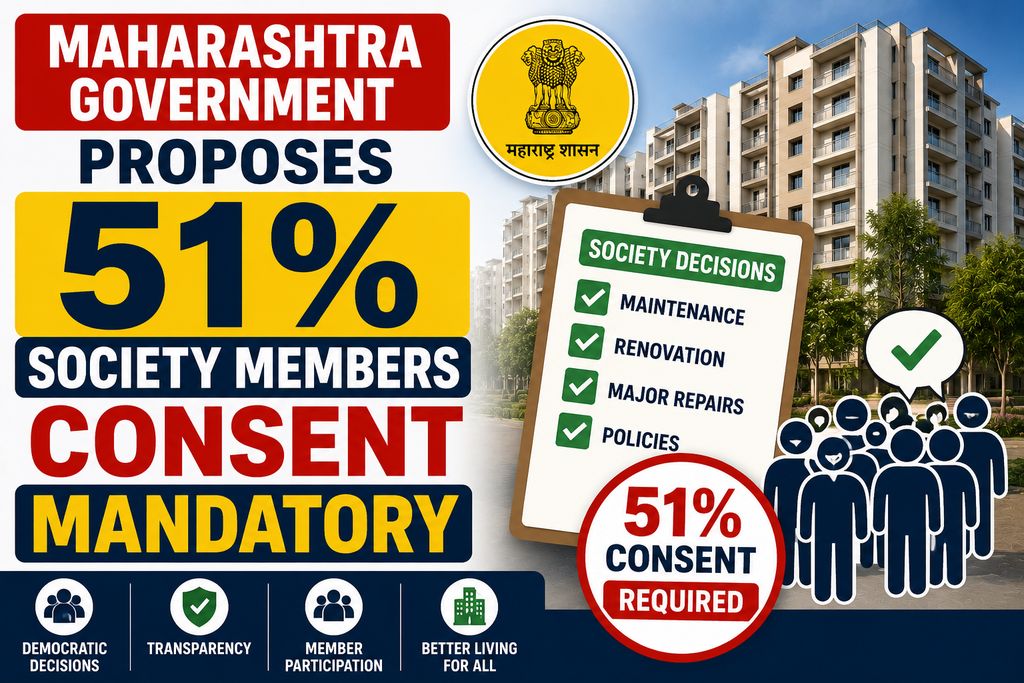
One of the most notable changes proposed in the draft rules is the requirement that cooperative housing societies must obtain the consent of at least 51% of their members before applying for conversion from Occupancy Class II to Occupancy Class I.
Previously, there was no mandatory requirement for such majority approval before initiating the conversion process.
This provision is intended to ensure that conversion decisions reflect the collective will of society members and reduce disputes arising from unilateral actions.
Direct Conversion Option for Individual Members
The draft rules also provide relief in cases where land was originally allotted directly to individual members and their names continue to appear in official revenue records such as:
- Property Cards
- 7/12 Extracts
In such situations, eligible members may apply directly to the District Collector for conversion after obtaining a No Objection Certificate (NOC) from the Deputy Registrar of Cooperative Societies, subject to approval by the State Government.
This provision is expected to simplify conversion in many older housing schemes.
Expanded Eligibility for More Housing Societies
The proposed amendments broaden the scope of beneficiaries by extending eligibility to societies formed on government land that was originally leased to:
- Individuals
- Institutions
- Trusts
and subsequently transferred to cooperative housing societies with approval from the competent authority.
Even where an unauthorised transfer has later been regularised by the government, such land will be deemed to have been granted for the purpose of a cooperative housing society and will qualify for conversion under the revised rules.
Mixed-Use Plots to Have Proportionate Conversion Premium
The draft notification also introduces clarity for mixed-use developments containing both residential and commercial components.
In such cases, the conversion premium payable to the government will be calculated proportionately based on the nature and extent of land use rather than applying a uniform formula.
This approach aims to make premium calculations more transparent and equitable.
Special Condition for Self-Redevelopment Projects
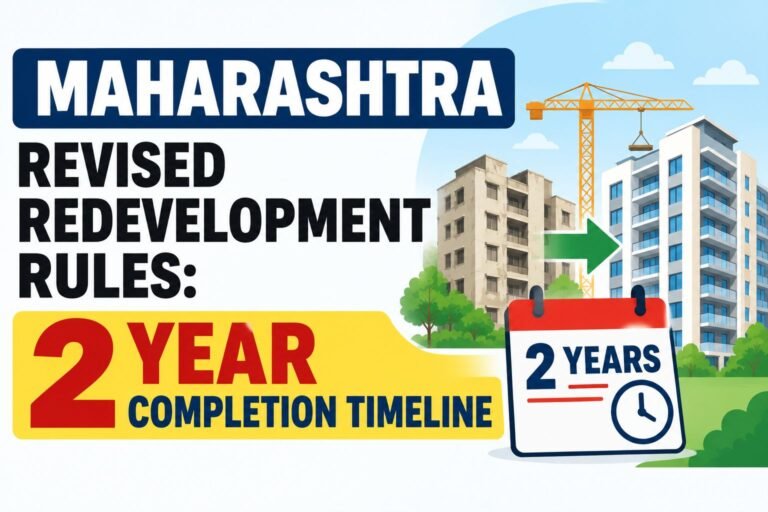
Housing societies opting for self-redevelopment after converting leasehold land into freehold will have to commence redevelopment work within two years from the date of conversion.
If redevelopment is not initiated within the prescribed period, the government may restore the land to Occupancy Class II status.
This condition seeks to ensure that societies undertake genuine redevelopment and do not obtain conversion merely for speculative purposes.
Existing Conversion Premium
Under the current policy, the government charges a premium equal to 5% of the Ready Reckoner value for converting Occupancy Class II land into Occupancy Class I.
The amount can generally be paid over a period of three years, making the financial burden more manageable for housing societies.
How the Proposed Changes Benefit Housing Societies
If implemented, the revised rules could provide several advantages:
- Simpler and more transparent conversion procedures.
- Greater participation of members through the mandatory 51% approval requirement.
- Expanded eligibility for societies formed on government-leased land.
- Direct application mechanism for eligible individual members.
- Clear guidelines for mixed-use developments.
- Better support for self-redevelopment initiatives.
- Increased legal certainty regarding ownership rights.
The reforms are expected to encourage redevelopment, strengthen property rights, and reduce procedural hurdles that have affected thousands of cooperative housing societies across Maharashtra.
Conclusion
The Maharashtra Government’s proposed amendments represent an important step towards simplifying the conversion of leasehold land into freehold ownership for cooperative housing societies. By introducing a 51% member consent requirement, widening eligibility, clarifying premium calculations, and supporting self-redevelopment, the draft rules seek to balance transparency with ease of implementation. Once finalised, these reforms are likely to provide long-term benefits to thousands of societies and property owners across the state.