
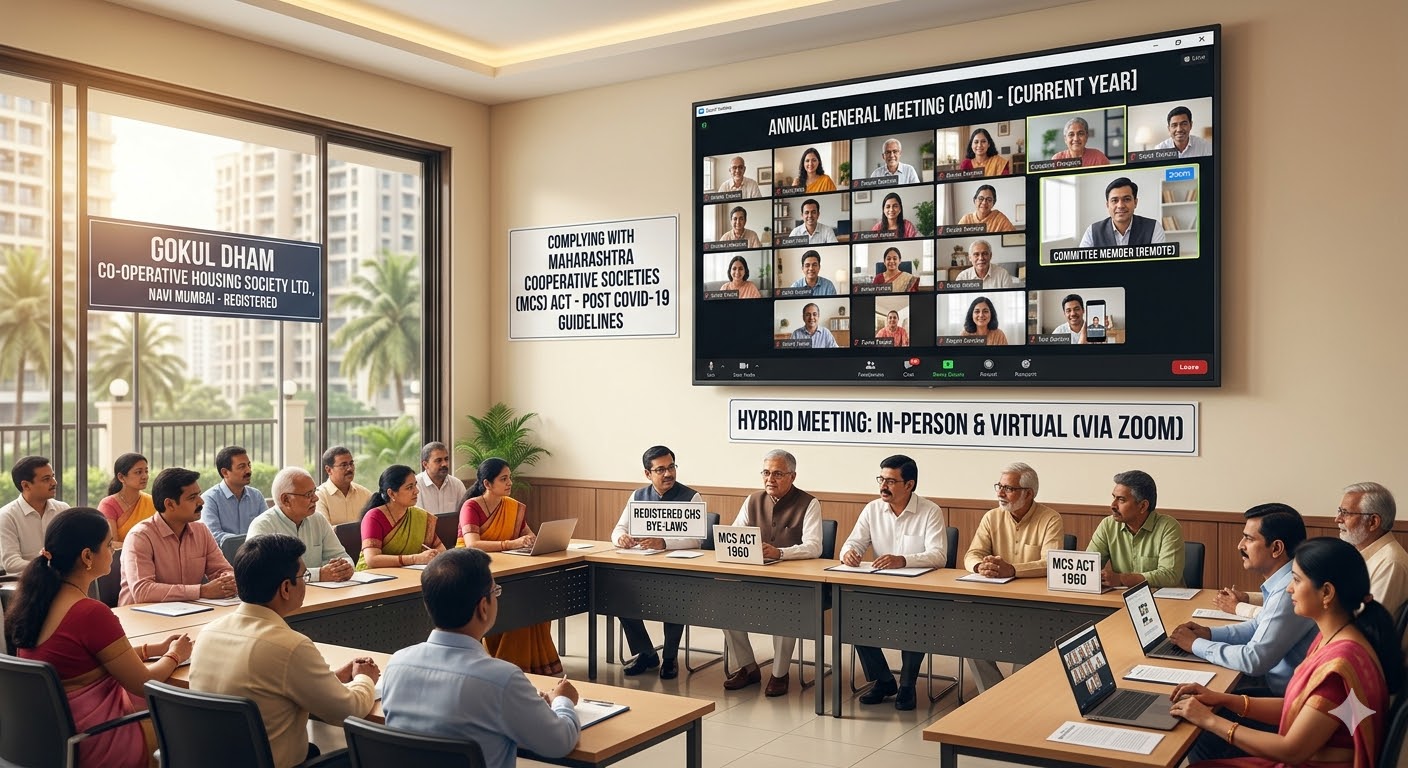
During the COVID-19 pandemic, cooperative housing societies across Maharashtra adopted virtual meetings to ensure that society administration continued without physical gatherings. Managing committee meetings and general body meetings were conducted through video conferencing and digital platforms, allowing members to participate safely.
However, many societies now wonder whether virtual meetings can continue even after the pandemic, especially to enable participation of non-resident members or members living abroad.
Government Permission for Virtual Meetings During the Pandemic
At the peak of the pandemic, the office of the Cooperative Commissioner permitted cooperative housing societies to conduct meetings through video conferencing or other digital modes. This step was taken to avoid large gatherings and reduce the risk of infection.
The decisions taken in such meetings were treated as legally valid, provided the society followed proper procedures and maintained records of the meeting.
These instructions were issued within the framework of the Maharashtra Co-operative Societies Act, 1960, allowing societies to continue administrative activities even when physical meetings were not possible.
Was the Virtual Meeting Facility Permanent?
The permission to conduct virtual meetings was essentially a temporary arrangement introduced during the pandemic as an emergency measure.
Once the situation improved and restrictions on public gatherings were lifted, societies gradually returned to physical meetings for managing committee and general body discussions.
As per the current understanding, no general extension has been officially granted allowing societies to continue virtual meetings as a standard practice under the law.
Can Societies Still Conduct Virtual Meetings?
Although the earlier permission was temporary, many experts believe that with technological advancement and increased digital participation, virtual meetings can be useful for cooperative housing societies.
Virtual meetings can help in:
• Increasing participation of members who live outside the city or country
• Improving transparency and communication within the society
• Reducing logistical challenges of gathering large numbers of members
However, societies must ensure that such meetings comply with the provisions of the MCS Act, relevant rules and society bye-laws.
Seeking Permission from the Registrar
If a society wishes to conduct meetings through digital platforms, it is advisable to seek prior written permission from the Registrar of Cooperative Societies.
Obtaining such permission helps ensure that:
• The decisions taken during the meeting remain legally valid
• Proper procedures for quorum and voting are followed
• The society remains compliant with cooperative laws
The registrar may specify certain conditions, such as maintaining attendance records, meeting minutes and proper identification of participants.
Advantages of Virtual Participation
Allowing virtual participation can significantly benefit housing societies, particularly in large urban areas where many members may not reside permanently in the building.
Some advantages include:
• Higher member participation in decision-making
• Convenience for senior citizens and working professionals
• Participation of non-resident owners in important decisions
If properly regulated, hybrid meetings combining physical and virtual participation may also improve governance in societies.
Conclusion
Virtual meetings in cooperative housing societies were introduced as a temporary measure during the COVID-19 pandemic to ensure continuity of administration while maintaining social distancing. Although the special permission has not been formally extended, societies may still explore the possibility of conducting virtual meetings with prior approval from the registrar and by ensuring compliance with the Maharashtra Cooperative Societies Act, rules and bye-laws. With growing digital adoption, such meetings can enhance member participation and transparency in society governance.