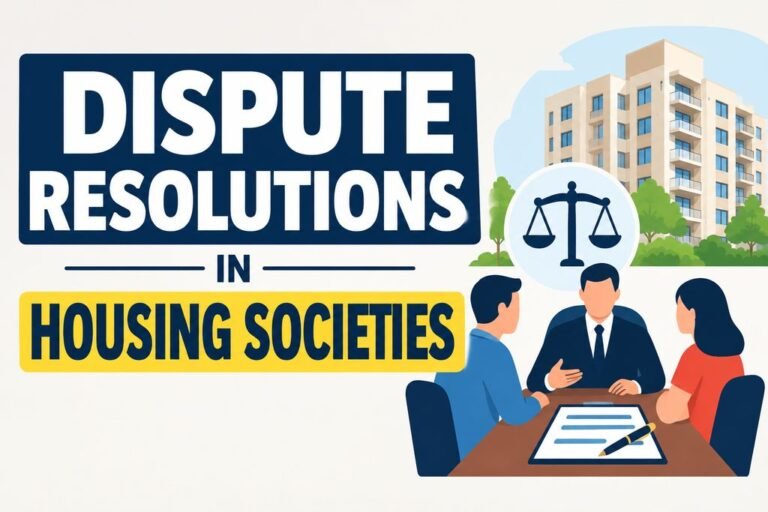

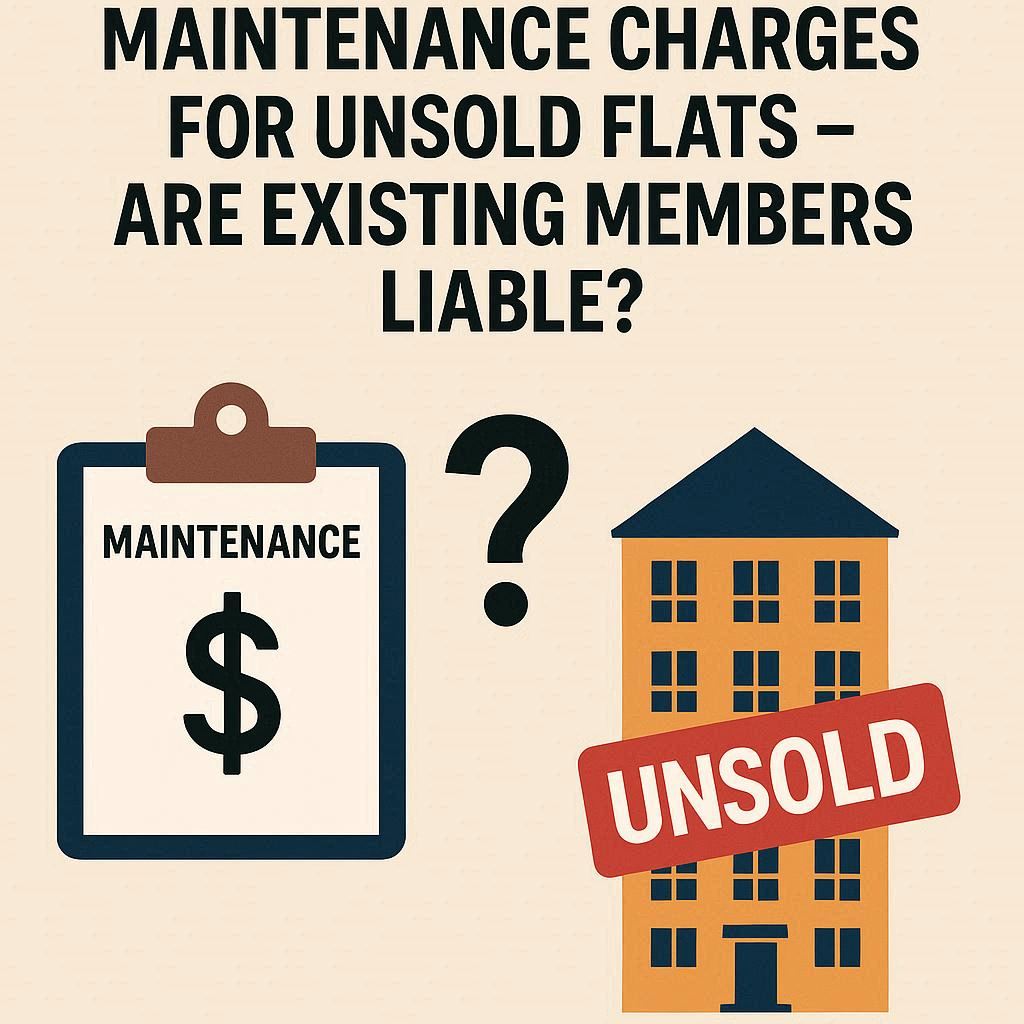
Many residents in newly formed housing societies face disputes regarding maintenance charges for unsold flats. In some cases, managing committees distribute the maintenance burden of unsold units among existing members, which leads to financial and legal disputes.
However, the law clearly defines who is responsible for paying maintenance for unsold flats.
Developer’s Responsibility for Unsold Flats
Under the provisions of the Real Estate (Regulation and Development) Act, 2016, the responsibility for paying maintenance charges of unsold flats lies with the developer or promoter.
Specifically, Section 11(4)(e) of RERA states that the promoter must pay all outgoings until the physical possession of the flat is transferred to the allottee. These outgoings include:
-
Maintenance charges
-
Municipal taxes
-
Electricity and water charges
-
Other statutory payments
Therefore, existing society members cannot be forced to bear the maintenance expenses of unsold or unoccupied flats.
Distribution of Maintenance Burden Is Not Legal
If a society distributes the maintenance charges of unsold flats among existing residents, it places an unfair financial burden on members.
The correct approach is:
-
The developer must continue paying maintenance for all unsold units.
-
Once a flat is sold and possession is given to the buyer, the responsibility shifts to the new owner.
In addition, if the developer collected advance maintenance charges from buyers, those funds must be transferred to the society.
Developer’s Liability Even After Society Formation
Even after the housing society is formed and property management is handed over, the developer remains responsible for any unpaid outgoings related to unsold flats.
If the promoter fails to pay such charges:
-
The developer remains liable to pay the dues.
-
Penal charges may also be imposed.
-
Authorities or affected persons can initiate legal proceedings against the developer.
When Is a Member Considered a Defaulter?
Under the Model Bye-Laws, particularly Bye-Laws 69 to 71, a member is considered a defaulter only if the society dues remain unpaid for more than three months from the due date or the date of service of the bill or notice.
Therefore, members who have already paid their dues cannot be arbitrarily labelled as defaulters.
Society Cannot Stop Essential Services
Even if a dispute over maintenance charges exists, the society cannot deny essential services to any member.
Essential services include:
-
Water supply
-
Electricity in common areas
-
Lift services
-
Lighting in common spaces
-
Sanitary services such as garbage collection
-
Building access systems such as digital or biometric entry
Blocking digital access or threatening to stop garbage collection can be considered harassment and misuse of authority by the managing committee.
Legal Remedies Available to Members
If a member is facing harassment or illegal demands, several remedies are available:
-
Present the issue before the General Body Meeting and explain the legal position.
-
File a complaint with the District Deputy Registrar (DDR) under the Maharashtra Co-operative Societies Act, 1960.
-
If harassment continues, lodge a complaint with the local police authorities.
While the society has the right to recover genuine dues under Section 154B-29 of the MCS Act, it cannot adopt coercive measures or deny essential services.
Importance of Proper Bye-Laws
To avoid such disputes, societies should include provisions in their bye-laws to ensure that maintenance charges for unsold flats are collected from the developer. This protects the financial interests of existing members and ensures smooth functioning of the society.
Conclusion
Maintenance charges for unsold flats are the developer’s responsibility under RERA until the flats are sold and possession is transferred. Existing society members cannot be forced to bear this burden. Additionally, the managing committee cannot deny essential services or harass members over disputed dues. If such issues arise, members have the right to approach the District Deputy Registrar or other authorities for relief.