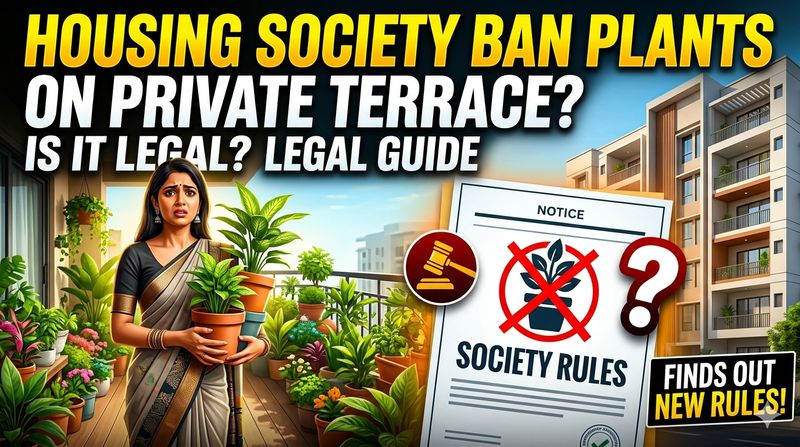
Gardening is a common hobby, especially for residents of terrace flats who enjoy exclusive access to open spaces. However, disputes often arise when societies impose blanket restrictions on placing plants, even on private terraces. Let’s understand the legal position and your rights.
Difference Between Private Terrace and Common Areas
The most important distinction is:
- Private Terrace (Exclusive Use Area)
- Forms part of your flat or is allotted for your exclusive use
- You have the right to reasonable enjoyment and use
- Common Areas (Shared Spaces)
- Includes lobby, staircase, common terrace, passages
- Regulated by the society for collective benefit
A society can frame rules for common areas, but cannot impose unreasonable restrictions on private property.
Can Society Restrict Plants on Your Personal Terrace?
In your case:
- The terrace has a separate entrance and is for your use
- Hence, the society cannot completely ban plants on your private terrace
However, your rights are subject to reasonable restrictions, especially if your activities:
- Cause damage to the building structure
- Lead to water leakage or seepage
- Affect other members’ property or comfort
Validity of Society Resolution
The resolution passed by the society:
- Is valid only for common areas like:
- Window grills (external structure)
- Staircases
- Lobbies
- Common terrace
- It becomes questionable when applied to:
- Private terrace areas
A blanket ban without considering ownership rights may be legally challengeable.
Penalty of ₹5,000 – Is It Legal?
As per society bye-laws:
- Penalty can be imposed under due process
- Maximum penalty (general violation) is ₹5,000 per year
However:
- Penalty must be:
- Reasonable and justified
- Applied only if there is an actual violation
- Imposing penalty merely for keeping plants on a private terrace may not be valid
Society’s Concerns – When Are They Justified?
The society’s concerns are not entirely unfounded. Issues may arise if:
- Water from pots drips onto lower floors
- Moisture causes damage to external walls or paint
- Excess load affects structural safety
- Plants attract pests or create hygiene issues
In such situations, the society can intervene and regulate, but not impose an absolute ban.
Precautions You Should Take
To avoid disputes and ensure compliance:
- Use drip trays under pots
- Avoid overwatering
- Ensure proper water drainage system
- Use lightweight planters
- Maintain cleanliness and prevent pest issues
- Avoid placing plants where they hang outside the façade
These steps show responsible usage and reduce chances of complaints.
Legal Position Under Housing Laws
Under the Maharashtra Cooperative Societies Act, 1960 and society bye-laws:
- Members have the right to peaceful enjoyment of their property
- Societies can regulate only to the extent of:
- Safety
- Structural integrity
- Common interest of members
What Can You Do If Dispute Continues?
If the society still insists on a ban:
- Write a formal representation explaining:
- Your terrace is private
- You are taking necessary precautions
- Request the society to:
- Modify the resolution
- Allow plants with reasonable conditions
- If unresolved, you may approach:
- Registrar
- Cooperative Court
Conclusion
A society cannot completely restrict gardening on a private terrace, but it can impose reasonable conditions to prevent damage or nuisance. The key lies in maintaining a balance between individual rights and collective interest. By taking proper precautions, you can continue enjoying your gardening hobby without violating society rules.