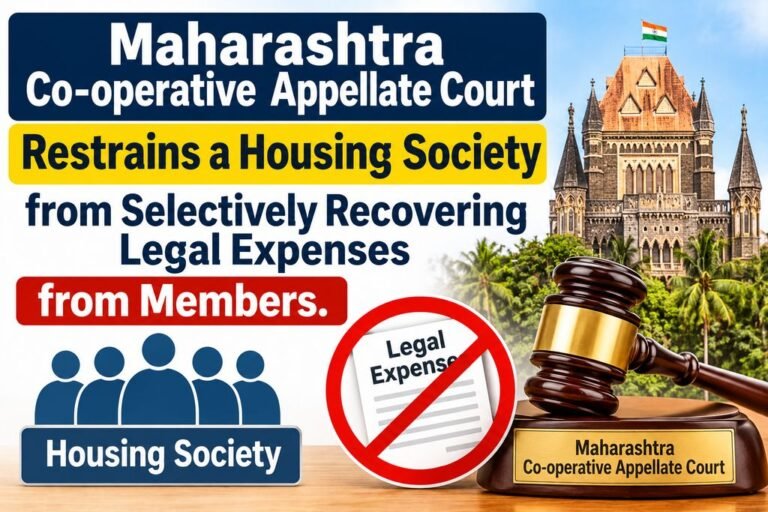

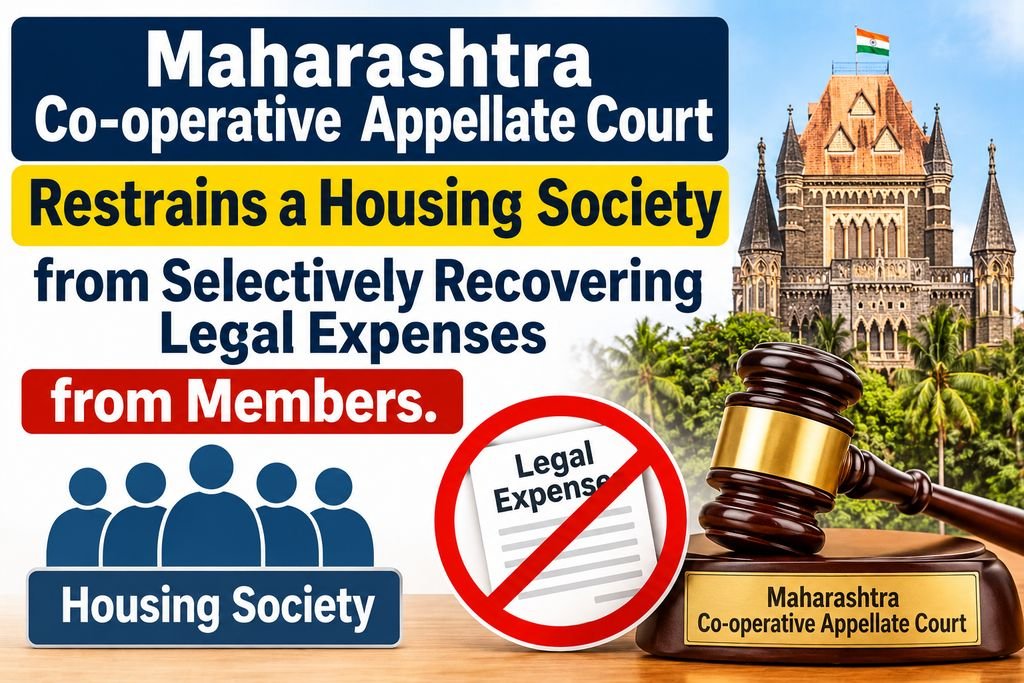
The Maharashtra Co-operative Appellate Court has restrained a Vile Parle housing society from selectively recovering legal expenses, along with interest, from six homeowners who had initiated legal proceedings against its managing committee over the alleged misappropriation of ₹3.08 crore in society funds.
In an interim order dated October 14, 2026, Justice A. S. Wanve directed the society to stop levying, demanding or collecting the disputed legal expenses from the six members until the final disposal of the main dispute.
The dispute arose after the society allegedly increased the monthly maintenance bills of these six homeowners by ₹71,429 each for June, July and August 2024. The society reportedly claimed that the additional amount represented legal expenses arising from the litigation initiated by the members.
The homeowners challenged this selective recovery, contending that the charges were unlawful and that the society was attempting to portray them as defaulters for pursuing legal remedies.
Background: Six Homeowners Challenge Selective Recovery of Legal Fees
The six homeowners had initiated legal proceedings against the managing committee over the alleged misappropriation of ₹3.08 crore of society funds.
Following the dispute, the society allegedly charged additional amounts towards legal expenses exclusively to these six members through their monthly maintenance bills.
The residents questioned why the legal expenses were being recovered only from them when the litigation concerned the society and its managing committee. They also challenged the society’s attempt to recover the amounts with interest.
The members therefore approached the Maharashtra Co-operative Appellate Court seeking protection against the selective levy and recovery of legal expenses through their maintenance bills.
Legal Expenses Form Part of Society’s Service Charges
The Appellate Court examined the relevant provisions of the Model Bye-laws applicable to co-operative housing societies, particularly Bye-laws 65, 66(k) and 67(vi).
Under these provisions, legal expenses are included within the society’s service charges. The Court observed that service charges are generally required to be divided equally among the members according to the number of flats or units.
The relevant provisions were subsequently renumbered in the updated Model Bye-laws as Bye-laws 64, 65(k) and 66(vi).
The Court observed:
“In the light of byelaws, it is prima facie seen that legal charges can be recovered equally from all members.”
Accordingly, the Court found that legal expenses incurred by the society would ordinarily form part of its service charges and could not simply be imposed selectively on particular members without following the prescribed procedure.
Society Debited Legal Expenses Before Passing AGM Resolution
One of the important circumstances considered by the Court was the timing of the recovery.
According to the documents placed before the Court, the society had debited legal expenses to the maintenance bills of the six homeowners on June 7, 2024.
However, the society relied upon an Annual General Meeting (AGM) resolution dated September 3, 2024 to justify the recovery.
The Court noted that the recovery had commenced several months before the AGM resolution was passed. This raised questions about the legality of the society’s action and whether the prescribed procedure had been followed.
The Court found, prima facie, that the society had charged the disputed legal expenses without a prior resolution or compliance with the proper procedure.
Society Cannot Use Legal Expenses to Pressurise Members
The Court also considered the circumstances in which the legal expenses were imposed.
The six homeowners had initiated proceedings against the managing committee concerning the alleged misappropriation of society funds. The Court noted that the members had obtained interim relief in those proceedings.
Against this background, the selective debit of legal expenses to their maintenance bills raised concerns about the society’s conduct.
“This conduct of the Society prima facie shows that it is adopting extra judicial methods against the disputants to pressurize them and deprive them from pursuing the legal remedies.”
The Court further noted that the society’s action appeared, at the interim stage, to be an attempt to discourage the members from pursuing their legal remedies and to classify them as defaulters.
Opportunity of Defence Required Before Imposing Charges on Individual Members
The Court also clarified that even if a housing society seeks to recover legal expenses from a particular member through a general body resolution, the concerned member must be given an opportunity to present their defence before the general body.
Further, the liability for legal costs arising out of judicial proceedings must be considered in accordance with the directions of the competent court or forum deciding the dispute.
A housing society cannot automatically transfer litigation expenses to selected members merely because they have initiated proceedings against the society or its managing committee.
Maharashtra Co-operative Appellate Court Grants Interim Relief
After considering the material placed before it, the Court found that the six homeowners had established a prima facie case for interim protection.
It observed that the disputed legal expenses had been debited to their maintenance bills without a proper resolution or compliance with the prescribed procedure. The selective recovery also appeared to be an extra-judicial method of pressurising the members and depriving them of their legal remedies.
The Court therefore restrained the society from levying, charging, demanding or collecting the disputed legal expenses, together with interest, from the six homeowners until the final disposal of the main dispute.
The interim order provides protection to the members against further recovery of the disputed amounts while the substantive dispute remains pending.
What This Order Means for Co-operative Housing Societies
The order highlights important principles governing the recovery of legal expenses by co-operative housing societies:
- Equal distribution of service charges: Legal expenses forming part of service charges are generally required to be shared equally among members in accordance with the applicable Model Bye-laws.
- Proper procedure must be followed: A society cannot impose additional charges on selected members without complying with the applicable bye-laws and prescribed procedure.
- Opportunity to defend: If the society proposes to impose legal expenses on an individual member through a general body resolution, the concerned member should be given an opportunity to present their defence.
- No retaliatory recovery: A managing committee cannot use maintenance bills or selective financial demands to discourage members from pursuing legitimate legal remedies.
- Court directions on litigation costs: The allocation of legal costs arising from judicial proceedings must be consistent with the directions of the competent court or forum.
The order reinforces that a housing society’s managing committee must act within the framework of the Maharashtra Co-operative Societies Act, applicable rules and the society’s bye-laws. It cannot use its administrative powers to pursue personal agendas or retaliate against members who raise concerns about the society’s functioning.
The important point is that an interim order does not finally determine the underlying dispute or establish the alleged misappropriation of funds. It provides interim protection against the disputed recovery until the main proceedings are decided.